
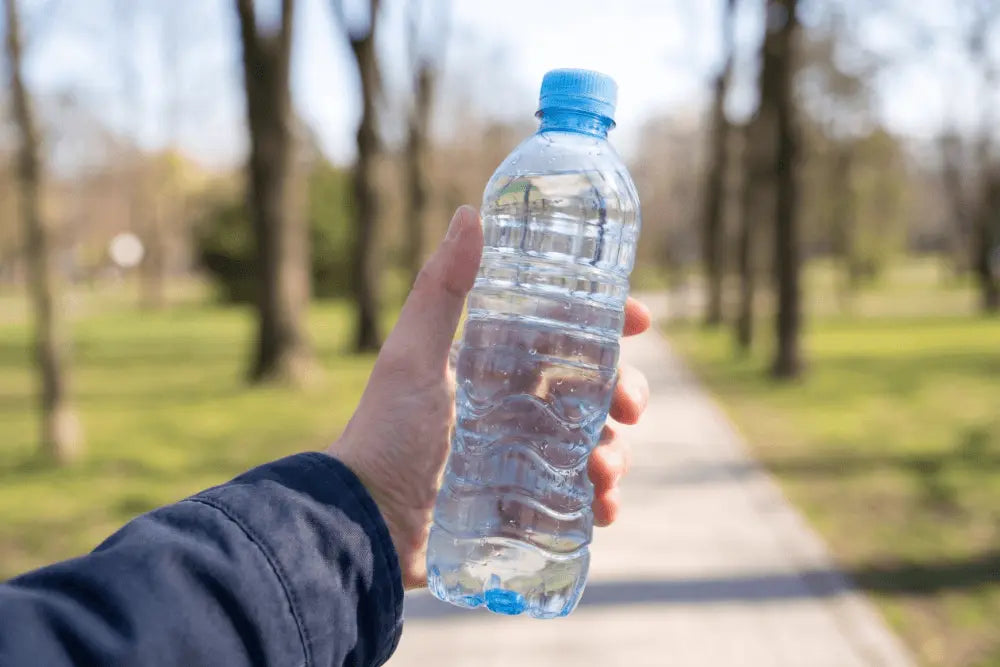
There is no single “figure for microplastics in water”. Results vary widely depending on the size of the particles being looked for, the analysis method and the samples chosen. In recent years, laboratories have been detecting smaller and smaller particles. This progress improves knowledge, but it also makes comparisons between studies more difficult.
Microplastics and nanoplastics: what are we talking about?
The term microplastics generally refers to polymer fragments smaller than 5 millimetres, while nanoplastics are much smaller. The precise definitions of the nanometre thresholds can vary from one publication to another. Their composition, shape and origin are also diverse: packaging, textile fibres, wear of materials and other releases.
These particles are studied in surface water, treated water and bottled drinks. However, a detected presence does not in itself constitute an estimate of health risk.
Why do some studies find far more particles than others?
Imagine two laboratories examining the same water. The first only detects relatively large fragments; the second is able to identify particles several hundred times smaller. The number recorded will inevitably be different. You also need to know whether the laboratory confirms that the particles are plastic, and whether it rules out accidental contamination introduced during sampling.
Tap water versus bottled water: a complex comparison
Recent studies have analysed plastic particles in several brands of bottled water and in samples from treatment plants. A study published at the end of 2025 in the journal Science of the Total Environment observed higher concentrations of micro- and nanoplastics in bottled water, particularly among the smallest particles, for the samples it studied.
It would nevertheless be misleading to turn this finding into a universal rule. The number of brands and sampling sites, and the detection technique, limit the scope of each study. Comparisons must be made using the same method and within a defined context.
The WHO report: what it said, and what it did not say
In its 2019 report, the World Health Organization considered that the available data were insufficient to conclude that there was an established health risk at the concentrations observed in drinking water. Above all, it called for improvements in measurement methods and in research on the effects of long-term exposure. This finding means neither that the problem is imaginary nor that every danger has been demonstrated.
Can these particles be removed with a home filter?
The physical retention of particles depends in particular on their size and on the characteristics of the filter medium or membrane. A filter that has been tested on certain particles cannot automatically claim to remove all micro- and nanoplastics. The difference between a stated pore size and a reduction that has actually been tested remains decisive.
To compare filtration technologies according to how you use them, read our guide Which water filter should you choose?
What we will keep following
Scientific publications are progressing on two fronts: detecting smaller particles and establishing methods that are comparable between laboratories. For consumers, the most useful approach is still to distinguish between the presence observed, the quantity actually measured and the effects on health, which are three different questions.